August 30, 2025
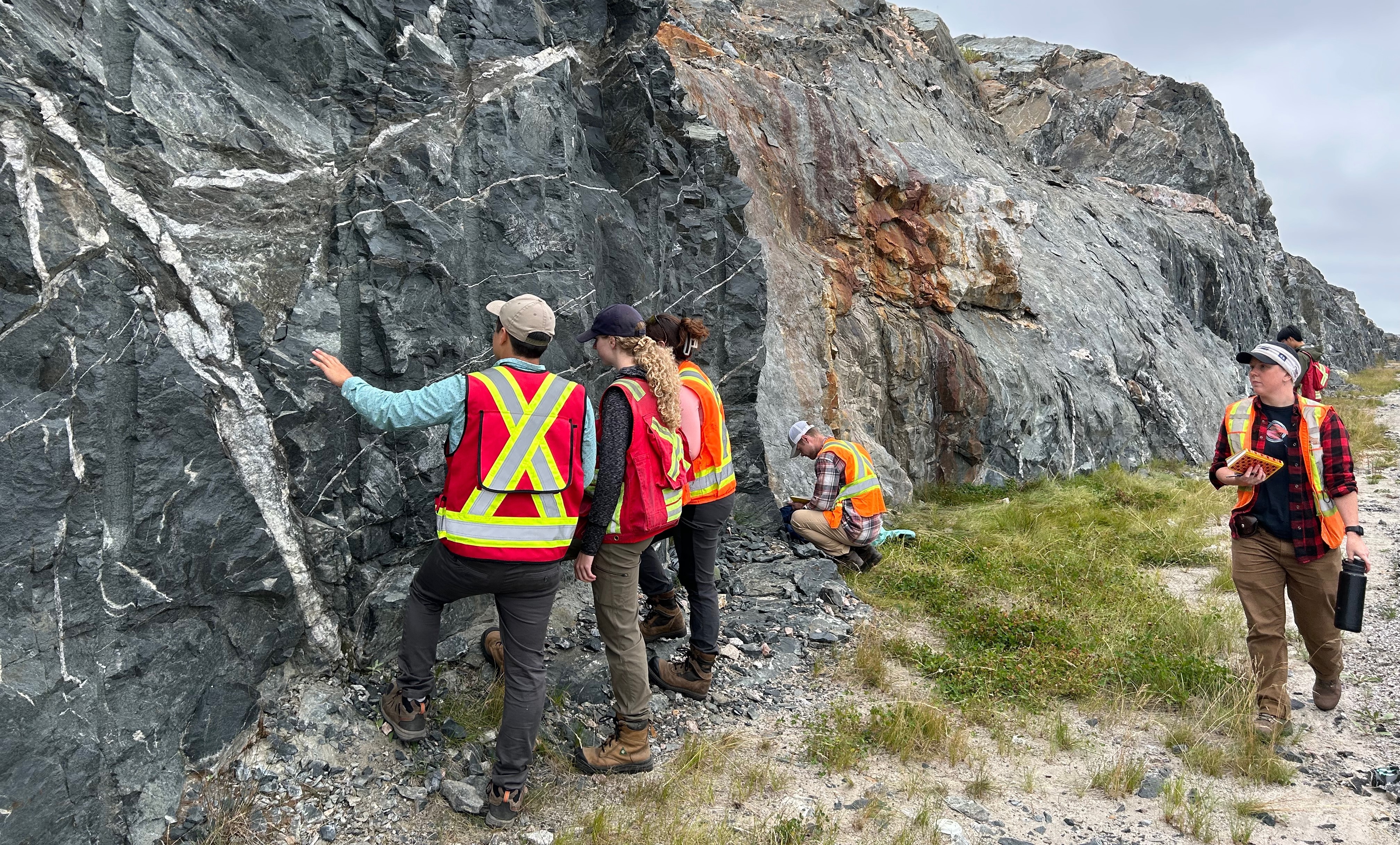
In geological fieldwork, bushwhacking is the deliberate movement away from established paths in order to access exposures that are otherwise unavailable. Because effective field geology depends on systematic observation and accurate recording of data, it is often necessary to reach outcrops in vegetated or uneven terrain where the most informative geology is exposed. This is especially relevant in our coastal region where dense vegetation is very prevalent especially at low elevations.

Maintaining accurate location is essential when working off-trail. Position is determined using a combination of GPS, compass bearings, pacing, and identifiable mapped features. Bushwhacking also requires strict attention to safety and conservation. Routes are chosen to avoid unnecessary risk from steep cliffs or unstable soils, thus appropriate clothing and equipment are carried, and access restrictions are respected.
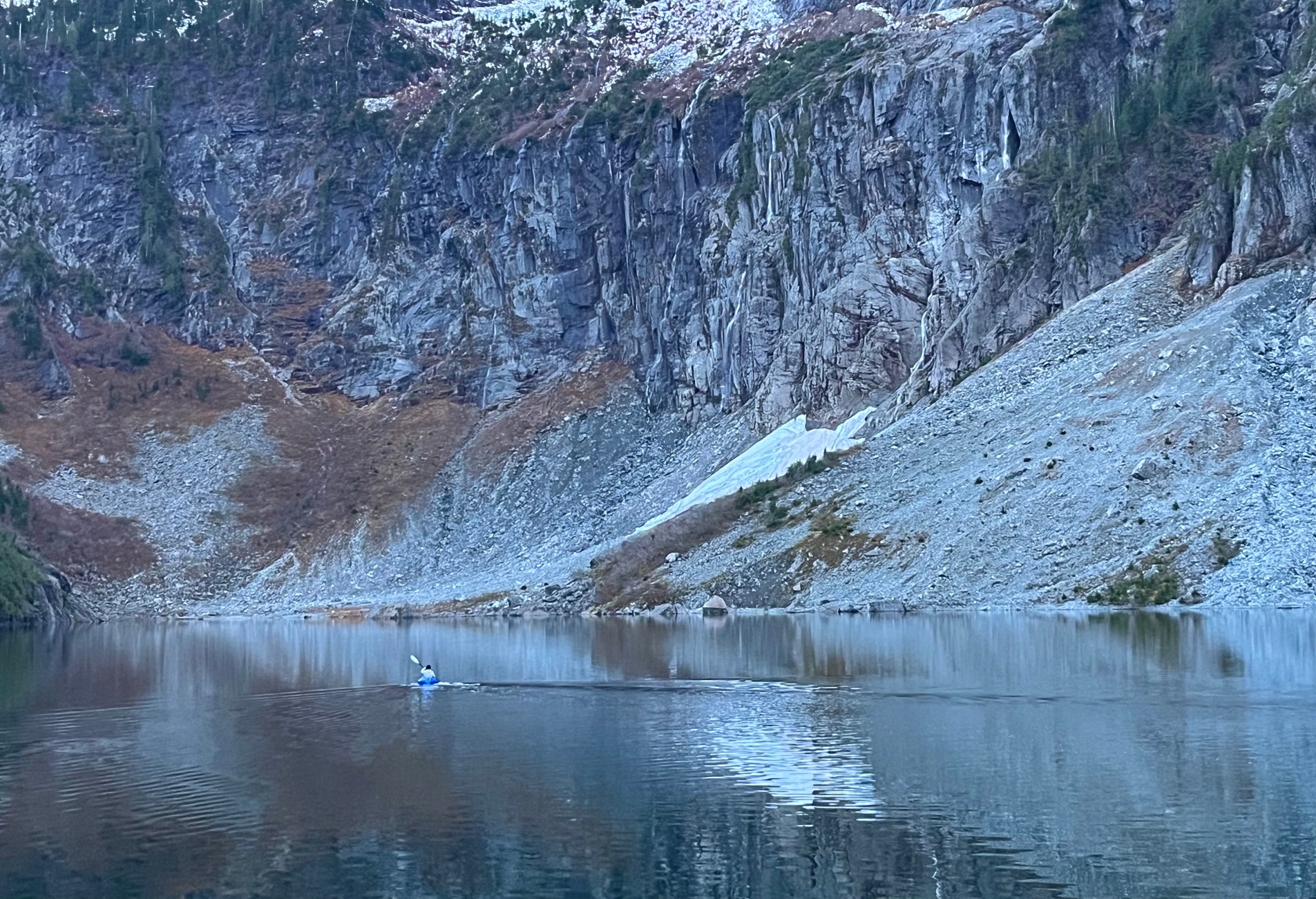
My experience with off-trail hiking was mostly limited to scrambling in the alpine and walking through meadows. I have never went through dense coastal forest or managed a route entirely on my own. November Lake in Squamish was a good location to get started with this skill. This subalpine lake is rarely visited and there is little information online. I have been talking with Matt throughout the summer, who is an expert with the BC backcountry with too much of an impressive resume to talk about in this blog, and has also been one of the few that have visited this lake. The weather window was strong this weekend and we decided to meetup in Squamish Saturday morning and drove our vehicles 30km east through some rugged FSRs to the starting point.


Matt led the way, and for the first 15 minutes it was hell on Earth. I was constantly cursing with the F-bomb, with my clothes getting soaked from the morning dew. I endured multiple scratches on my neck and face while getting hit by spider webs in the face. There was bear scat everywhere. The mosquitoes were relentless. The gear I brought: gloves, bear spray, PPE clothes, permethrin and field boots really came in handy. After a while though, I got used to it and just accepted my fate that there was no turning back.


45 minutes later we reached November Creek, which we had to somehow ford. The water level and flow velocity was quite high but nothing I’m unfamiliar with. We looked around for nice boulders to hop across, but ended up shimmying across on a large log.

After the crossing we started to gain elevation quite fast. The terrain around the creekbed was choked with Devil’s club and blueberry bushes which aren’t the most pleasant things to walk through. It was also extremely steep and unstable, which required careful footing. We then reached more mature forest at around 1200m elevation which was very beautiful. Half an hour later the terrain gave way to subalpine meadows with high density of blueberry bushes. There was bear scat everywhere and lots of noise had to be made. Shortly after, the lake was reached, and it was absolutely worth the effort.


We spent some time packrafting the lake as well, but spotted nothing of particular interest. By afternoon, we headed back to the car. On the drive back to town, I reflected on how much I had learned in just a few hours. This experience reinforced that bushwhacking is as much about patience, observation, and adaptability as it is about physical endurance. I now feel far more confident in my ability to tackle similar terrain while working with field notes and instruments, and it was a reminder that careful preparation and guidance from experienced mentors like Matt make all the difference. Thank you!
References:
Ancient Forest Alliance. (2023, May 3). Devil’s club. Ancient Forest Alliance. https://ancientforestalliance.org/devils-club/